We believe Tequity is the best team on the planet for 0→1 founders to build category defining companies and launch.
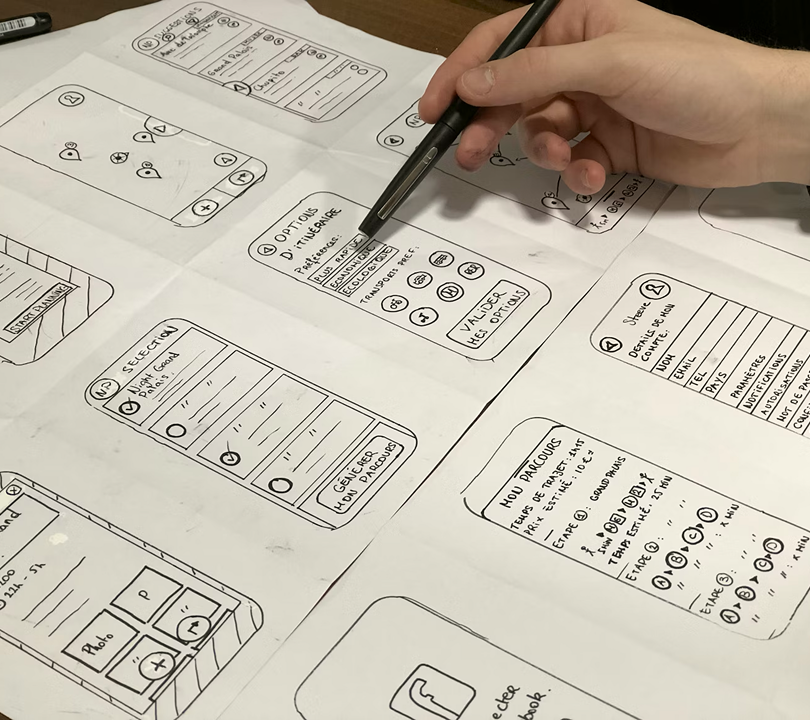
We understand that the journey to PMF is not linear but full of calculative pivots. Our team of product designers and engineers supercharges your product’s iterative cycles atfounder speed.
Testimonials
Why our partners bet on Tequity for their Computer Vision Development success
"Tequity has been a true partner for ChargeZone not just in our product development, but company evolution as well. They rebuilt our entire technology systems on new age software stacks which is enabling us to modernize the electric energy infrastructure globally."
Ravindra Mohan
Director of Strategy and Business
"The team is a very talented full-stack studio. We have engaged with them on several projects and we were always extremely happy with the results. The team takes feedback really well and is aligned with you to make the best possible experience for the end user."
Rohith Salim
Co-founder, Spotdraft
Range of Computer Vision Development Services we offer
Use this text to expand on your headline. Keep it short and clear.
Image and Video Recognition
We develop computer vision systems capable of identifying, classifying, and analyzing objects, people, and activities within images and video content. These solutions help businesses enhance their decision-making processes by providing real-time visual data insights.
Facial Recognition Technology
Implementing advanced facial recognition systems that enable secure authentication, identity verification, and personalized user experiences. This technology is commonly used in security, surveillance, and access control applications.
Object Detection and Tracking
Creating intelligent systems for detecting and tracking objects in real-time, ideal for applications in security, inventory management, and automated manufacturing. This technology is perfect for surveillance, autonomous vehicles, and logistics.
Augmented Reality (AR) Integration
Building AR applications powered by computer vision that provide interactive and immersive experiences for end-users. This is especially useful for retail, education, and training, where users can interact with virtual elements in the real world.
Optical Character Recognition (OCR)
Developing systems to extract text from scanned documents, images, or handwritten notes, turning them into editable, searchable digital content. OCR is valuable in automating document processing and data entry, saving time and reducing errors.
3D Vision and Depth Perception
Leveraging depth-sensing technologies to enable 3D visualization and depth perception for use cases in robotics, autonomous vehicles, and healthcare. 3D vision solutions allow machines to perceive their environment in three dimensions, improving accuracy in navigation and object handling.
Medical Imaging Analysis
Providing computer vision solutions that assist medical professionals in interpreting medical images such as X-rays, MRIs, and CT scans. These solutions help detect anomalies, identify diseases, and improve diagnostic accuracy in healthcare settings.
Automated Quality Inspection Systems
Developing AI-driven quality inspection systems that automatically detect defects and inconsistencies in manufacturing processes. These systems increase efficiency and accuracy in production lines, reducing human error and ensuring high-quality output.
We dive deep into your domain, goals, and current systems to identify where AI can deliver measurable value. This strategic alignment ensures solutions that serve your real needs.
02. Feasibility Study & Solution Architecture
We assess available data, technical viability, and ROI potential. A tailored solution architecture is prepared with model choices, tools, and infrastructure recommendations.
03. Model Design & Development
Based on the scope, we either develop models from scratch or fine-tune pre-trained ones. We iterate rigorously to balance accuracy, speed, and scalability.
04. Product Development & AI Integration
Our frontend/backend engineers integrate the AI with your platform—be it web, mobile, or internal tools. We build intuitive UIs and ensure AI models function seamlessly in real-world environments.
05. Deployment, Testing & Optimization
We deploy to the cloud with scalable infrastructure, run extensive QA and performance tests, and optimize for production. Real-time monitoring and alerts ensure continued reliability.
06. Post-launch Support & AI Iteration
After launch, we track performance, collect feedback, and refine both the AI and UX. You get support in scaling the model, retraining with new data, or expanding features.
METRICS SECTION
When clarity compounds, everything improves
50+
Teams aligned
1500+
Pages rewritten
99%
Strategic clarity
23+
Frameworks applied
contact process
Your work deserves a better framework
Your work deserves more than just execution—we turn complexity into a clear framework.
01
Intro Call
A 30-minute conversation to understand your challenge.
02
Proposal & fit
Clear next steps, scope, and expected outcomes — no jargon.
03
Start working
Direct collaboration with senior consultants from Day One.
industries
Industries that our Computer Vision Development Services excels in
We’ve honed a process that adapts to organizations across multiple Industries
Practical clarity on how we work and what comes next.
What is computer vision, and how does it benefit my business?
Computer vision allows machines to interpret and understand visual information, enabling tasks like object detection, image classification, and automated quality checks. It benefits businesses by enhancing automation, improving accuracy, and reducing human error.
How accurate is facial recognition in security systems?
Facial recognition technology has become highly accurate, with advancements in deep learning and neural networks. It is widely used for secure access control, identity verification, and surveillance, with an accuracy rate depending on the quality of the data and the model.
Can computer vision help automate my manufacturing process?
Yes, computer vision can be used to automate quality inspection, defect detection, and real-time monitoring of products on the assembly line. This increases efficiency, reduces human error, and ensures high-quality products.
How does OCR work, and where can it be applied?
Optical Character Recognition (OCR) technology converts text from scanned documents, images, or handwritten notes into editable digital content. It is widely used in document processing, data entry automation, and text extraction from historical archives.



.png)